Thought
Doom scrolling – Part 1: Why We Can’t Look Away
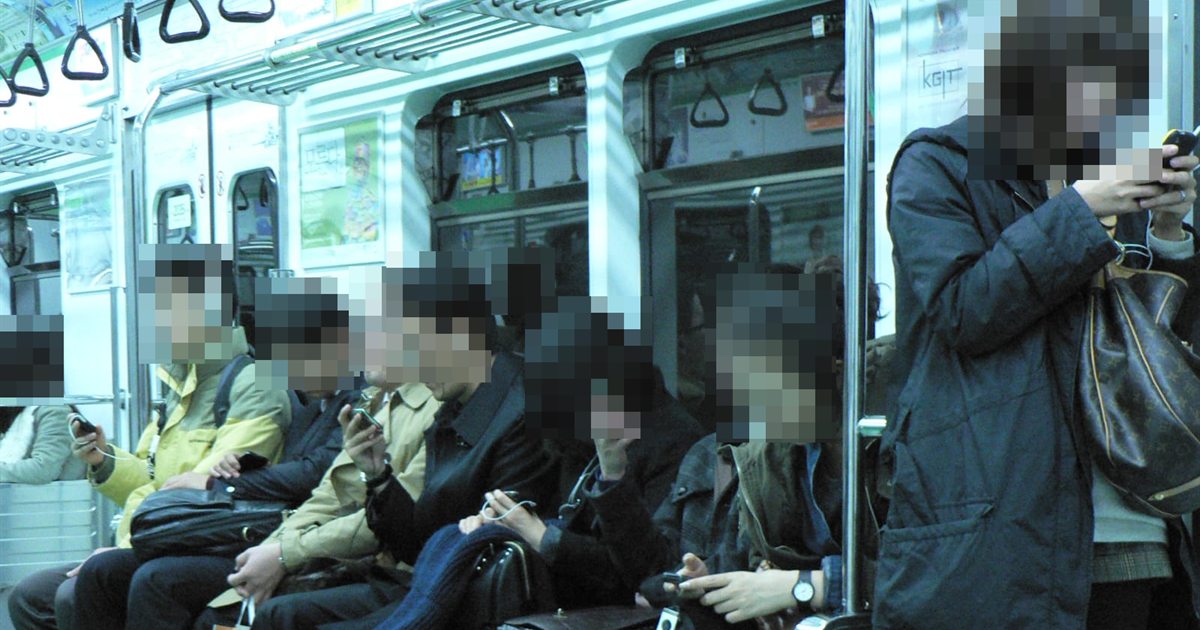
I spend or used to spend I should say about 2 hours each day looking down at my phone scrolling through social media while travelling to my office and back. One day, I looked up from my phone because my phone had no charge and realized everyone around me was doing the same thing. Whilst not intending for it, everyone was looking at their phone. Well…Uhm... I didn’t mean to peek but everyone mostly was looking at reels, shorts and feeds. Although a few were smiling while looking at their phone, most were looking very blank and slightly tired. I knew that look on the face well as I was doing this every day.
I wanted to understand why we are so glued to our phones. I didn’t want to hear ‘they’re bad’ or ‘lack self-control’. However, I wanted to understand what is actually happening in our brains, apps and daily routines.
What is doomscrolling?
The term started on Twitter in 2018. It became popular in 2020 during the pandemic with people using the term to describe when they were binge watching negative news.1 However, this isn’t just a new internet term. In 2022, Bhakti Sharma, Susanna Lee and Benjamin Johnson conducted a study to see what is actually happening. In the journal Technology, Mind, and Behavior, they found doomscrolling is a unique behavior that can be measured. They found it tends to start innocently to keep up to date but can become addictive. They found men and younger people are more likely to do this. They also found it is linked to FOMO and constant connectivity on our smartphones.2 However, in common speech most of us use the term more loosely. We use it to describe when we endlessly half-heartedly scroll through reels and feeds.
Why are we glued?
Looking at the research, I found four reasons.
1. Our brains love a gamble!
Dopamine is often referred to as the pleasure centre, however, studies have shown that dopamine neurons are most active when we receive a better reward than what we were expecting. This helps our brains learn what is valuable to repeat.3 In decades past, psychologist B.F. Skinner found that the most persistent behaviour happens when we receive random rewards. Social media apps use this technique.4 Most of the content on our feeds is boring. Occasionally there will be a hilarious, shocking or friend post. As we never know which post we are going to get, we never have a natural stopping point. My thumb wasn’t looking to watch what was on my screen rather it was looking for the next good thing.
2. Negative news captures our attention
People tend to place more importance on negative information.5 In 2023 a study was done analysing 105,000+ variations of headlines on the news site Upworthy. This resulted in around 5.7 million clicks and they found that for every negative word in the headline, there was around a 2.3% increase in clicks. The positive words decreased this but however, most of the work was done by sad words.6 The researchers also suspect that anxiety and doomscrolling go hand in hand. However, this hasn’t been proven yet.7 We easily fall into a trap where we feel anxious and scroll or scroll and feel anxious.
3. Apps are designed so we never reach the end
Most social media platforms are free. This means they make money from advertisers. The more time we spend on them, the more ads we see. The Infinite scroll was invented by designer Aza Raskin in 2006 to remove the need to press next page. The same has now has now admitted he didn’t realize how it would be used to gain our attention.8 On Adam Grants ReThinking podcast in 2024 he estimated that we waste around a hundred thousand human lifetimes a day. He also went onto say that without infinite scroll, doomscrolling wouldn’t exist.9 When reading a newspaper or book, eventually we reach the end and decide if we want to continue. With infinite scroll and autoplay we never get this decision point.
4. We’re not great with our own thoughts
In a famous paper in 2014, psychologist Timothy Wilson and colleagues ran 11 studies. They found that in general people do not enjoy spending 6-15mins alone with nothing to do but think.10 In one study, participants had the option to give themselves a mild electric shock. They had already said they would pay to avoid this and yet 12 out of 18 men and 6 out of 24 women pressed the button at least once.11
Commuting gives us plenty of idle time. We now always have something to do in our pockets and I noticed this on my commute. In 2024 Indians spent an average of 5 hours on their phones. Nearly 70% of this was spent on social media, games and videos. This totals to 1.1 trillion hours in the country in one year.12 We are third in the world for most daily screen time on our mobiles. Coming behind Indonesia and Brazil.13 A study by Boston Consulting Group found that we spend on average 4.9 hours on our phones. This is up from around 2 hours. We also check our phones 70-80 times a day. However, around half the time we have no real reason to be checking our phones.14 Whilst these reports are done differently, they all show the same trend. We have cheap smartphones and some of the cheapest mobile data in the world meaning almost everyone has a screen in their hands. Our feeds are becoming better at knowing what will keep us engaged.15
However, the fact that we check our phones with no reason hit me. This is me! This doesn’t mean we are weak. Our brains are working as they should and our apps are designed to utilise this. Knowing why we do this is the first step.
Cases cited
- University of Florida. (2022, January). UF study finds “doomscrolling” is a unique behavior. UF News. ↩
- Sharma, B., Lee, S. S., & Johnson, B. K. (2022). The dark at the end of the tunnel: Doomscrolling on social media newsfeeds. Technology, Mind, and Behavior, 3(1), 144-156. ↩
- Haynes, T. (2018, May 1). Dopamine, smartphones and you: A battle for your time. Science in the News, Harvard University. ↩
- Haynes, T. (2018, May 1). Dopamine, smartphones and you: A battle for your time. Science in the News, Harvard University. ↩
- Harvard T.H. Chan School of Public Health. (2023). Lessons learned: A negative headline makes it more likely you’ll click. ↩
- Robertson, C. E., Pröllochs, N., Schwarzenegger, K., Pärnamets, P., Van Bavel, J. J., & Feuerriegel, S. (2023). Negativity drives online news consumption. Nature Human Behaviour, 7, 812-822. ↩
- Futurity. (2022). Doomscrolling is a unique behavior. ↩
- Masters of Scale. (n.d.). He invented infinite scroll and says he regrets it [Video]. ↩
- Grant, A. (Host). (2024, May 14). Aza Raskin on why technology and democracy are in an imagination crisis [Podcast episode transcript]. In ReThinking with Adam Grant. TED. ↩
- Wilson, T. D., Reinhard, D. A., Westgate, E. C., Gilbert, D. T., Ellerbeck, N., Hahn, C., Brown, C. L., & Shaked, A. (2014). Just think: The challenges of the disengaged mind. Science, 345(6192), 75-77. ↩
- University of Virginia. (2014, July 3). Doing something is better than doing nothing for most people, study shows. ↩
- Bloomberg. (2025, March 27). Indians spent 1.1 trillion hours on smartphones in 2024, EY says. ↩
- The Swipe Up. (2025, March). Addicts to phones? Indians spend an average of five hours a day on their phones. ↩
- BOOM. (n.d.). 84% Indians check phones within 15 minutes of waking up: Report. ↩
- The Swipe Up. (2025, March). Addicts to phones? Indians spend an average of five hours a day on their phones. ↩